China Branch of BRICS Institute of Future Networks

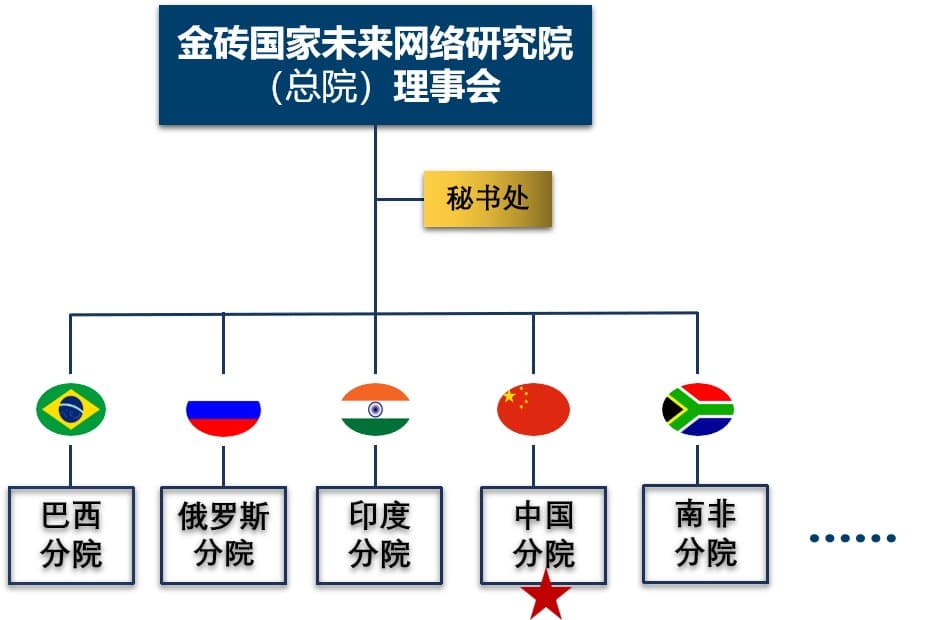
The China Branch of the BRICS Institute of Future Networks, registered as BRICS Institute of Future Networks (China-Shenzhen), is an international institution established by consensus at the 9th BRICS Leaders' Meeting and approved at the 4th BRICS Communications Ministers Meeting. It is jointly built by the Ministry of Industry and Information Technology and the Shenzhen Municipal People's Government, co-hosted by the Shenzhen Municipal Industry and Information Technology Bureau and the China Academy of Information and Communications Technology, officially landed in Shenzhen in August 2019, and formally began operations in June 2020.
Background of Establishment
In September 2017, BRICS leaders issued the Xiamen Declaration, proposing for the first time the idea of establishing a "BRICS future networks research institution."
In September 2018, the 4th BRICS Communications Ministers Meeting discussed and reviewed the proposal to establish the BRICS Institute of Future Networks.
On August 6, 2019, the inauguration ceremony of the China Branch and the Future Network Innovation Forum were held in Shenzhen, where the China Branch was officially unveiled.
On June 5, 2020, the first Council was established and the China Branch formally began operations.
Mission & Positioning
The China Branch conscientiously implements President Xi Jinping's statements at BRICS leaders' meetings, the consensus reached at successive BRICS summits, and the spirit of the BRICS communications ministers' meetings. Rooted in Shenzhen, serving national development and facing the world, it makes full use of both domestic and international markets and resources, focuses on future networks and other ICT fields, and strives to become an internationally influential professional think tank and a leading, demonstrative platform for international exchange and cooperation in future networks. It promotes practical cooperation among BRICS countries, emerging markets and developing countries in technological innovation, application promotion, standards development, policy research, industrial facilitation, infrastructure construction, international training and talent cultivation, while also serving the Belt and Road Initiative, the Go Global strategy, and the development of the Guangdong-Hong Kong-Macao Greater Bay Area and the Shenzhen Demonstration Zone.
Consensus from BRICS Leaders' Meetings
2017
Xiamen Declaration of the 9th BRICS Leaders' Meeting
Proposed that "we encourage exploring the establishment of a BRICS future networks research institution."
2019
News Release on the Informal BRICS Leaders' Meeting in Osaka
Proposed that "we encourage sharing best practices in areas such as using networks to eradicate poverty and industrial digital transformation. We stress the importance of continuing BRICS cooperation in science, technology, innovation and entrepreneurship, including the BRICS Partnership on New Industrial Revolution, BRICS Innovation Network, BRICS Institute of Future Networks and Young Scientist Forum."
2022
Beijing Declaration of the 14th BRICS Summit
Proposed that "we encourage the BRICS Institute of Future Networks and the Digital BRICS Task Force to formulate their respective work plans as soon as possible and carry out cooperation in R&D and application of emerging technologies."
2023
President Xi Jinping at the 15th BRICS Summit
"Artificial intelligence (AI) is a new area of development. BRICS countries have agreed to launch the AI Study Group of BRICS Institute of Future Networks at an early date."
2025
Rio de Janeiro Declaration of the 17th BRICS Summit
The declaration welcomed the Institute's adoption of the terms of reference for the AI, next-generation communications, Industrial Internet 4.0 applications, and electromagnetic radiation study groups, as well as the nomination of the president and vice presidents, and expressed expectations for tangible outcomes.
Council
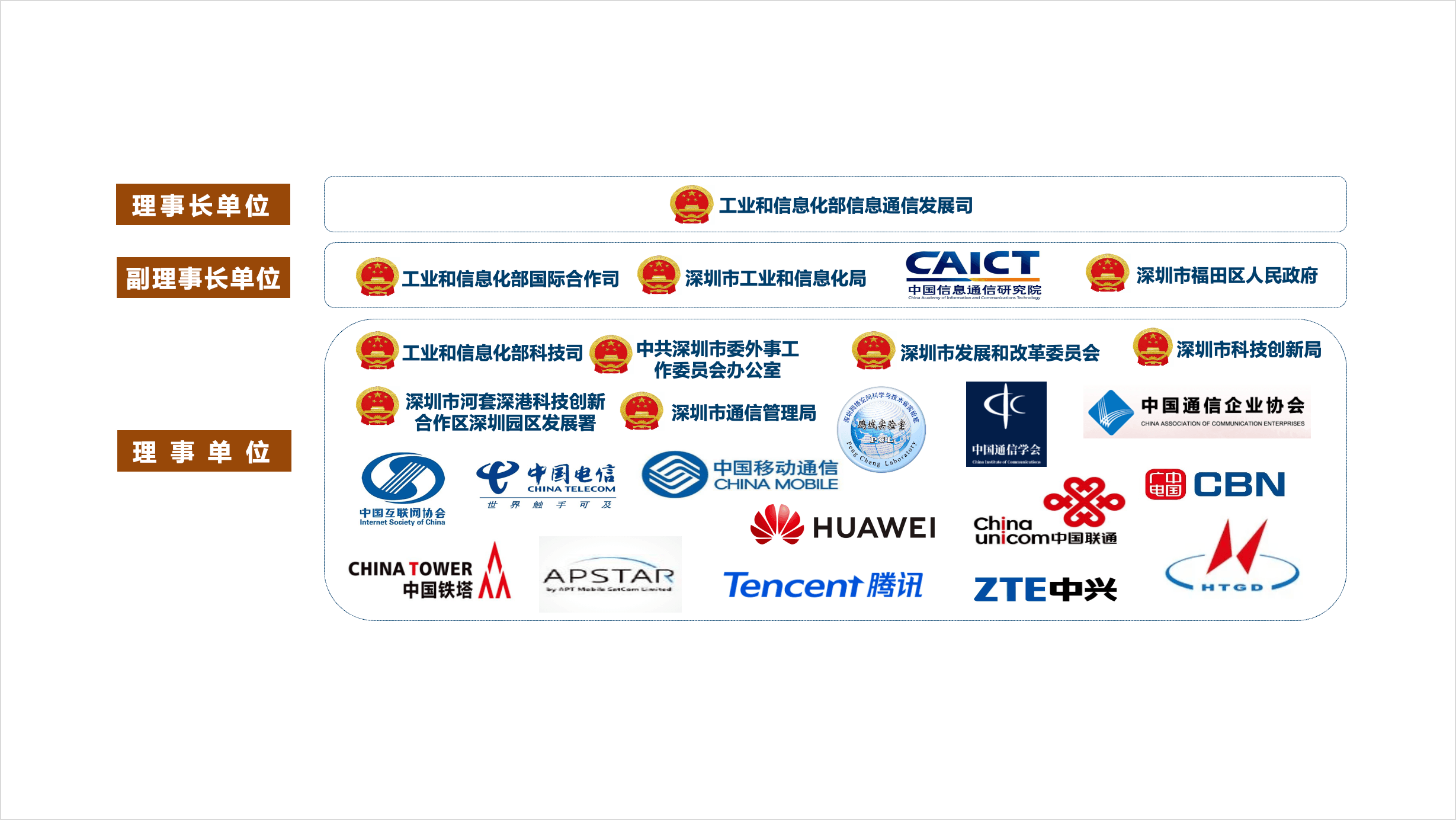
The Council adopts a seat-based system and is composed of relevant departments of the Ministry of Industry and Information Technology, the Shenzhen Municipal People's Government, host institutions, and influential and representative domestic research institutions, social organizations and enterprises.

Charter of BRICS Institute of Future Networks (China-Shenzhen)
The charter is publicly disclosed here and can be downloaded directly for the official version.
Departments
The China Branch implements the president responsibility system under the leadership of the Council, with six internal departments: General Management, International Cooperation, Industrial Policy, Research Innovation, Business Development, and Market Development.
General Management Department
Handles administration, finance, assets, human resources and property management, providing services, support and logistics for the normal operation of the China Branch.
Industrial Policy Department
Studies ICT industrial policies of BRICS countries, provides policy consulting, and supports the formulation of strategies, plans, policies and regulations in the ICT field.
International Cooperation Department
Organizes international technical exchanges, expert visits, talent training, seminars, summits and forums, and expands in-depth cooperation with international organizations.
Business Development Department
Leads ICT industry incubation, builds the BRICS ICT industrial ecosystem, promotes cooperation with universities, research institutes and enterprises, introduces new technologies and business models, and advances commercialization.
Research Innovation Department
Participates in building future network, next-generation mobile communications and industrial Internet testing infrastructure, develops ICT infrastructure platforms, and provides information security services.
Market Development Department
Leads market research and analysis, business expansion, customer relationship maintenance, and market strategy execution to expand institutional influence and strengthen brand value.